

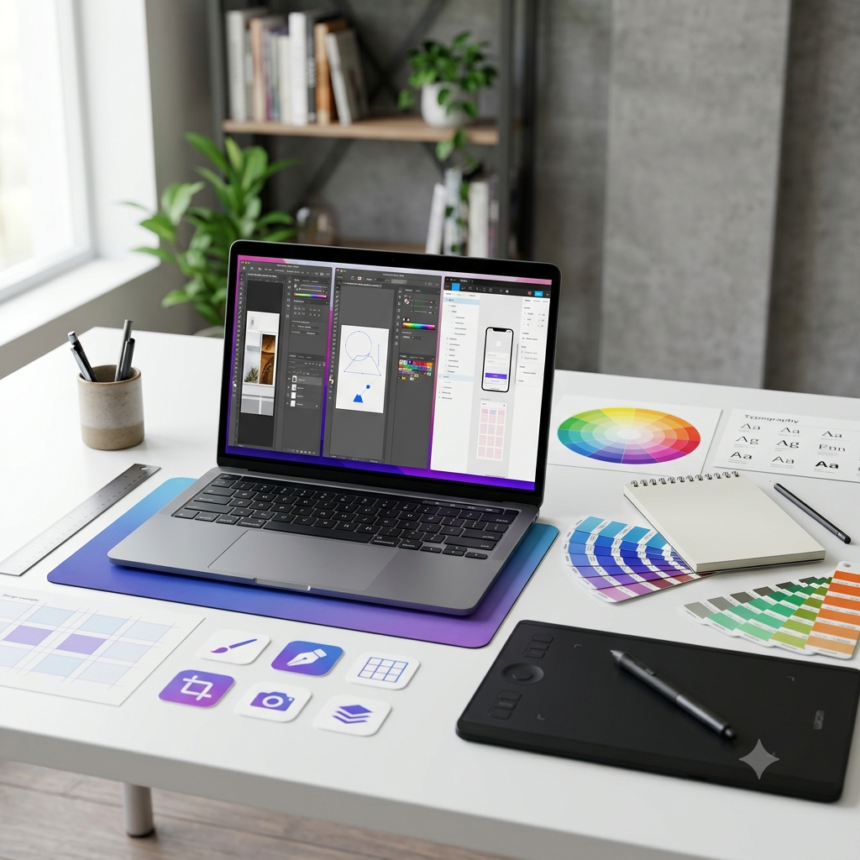
Essential Graphic Design Tips Every Beginner Should Know :-
Graphic design is one of the most valuable creative skills in today’s digital world. Whether you want to become a freelance designer, build a personal brand, create social media graphics, or work for a design agency, understanding the fundamentals of graphic design is the key to success.
Many beginners jump straight into learning software like Adobe Photoshop or Illustrator. While knowing the tools is important, great design is built on strong principles—not expensive software.
In this guide, you’ll discover essential graphic design tips that will help you build a solid foundation and improve your creativity from day one.
What Is Graphic Design?
Graphic design is the art of communicating ideas through visual elements such as typography, colors, images, icons, shapes, and layouts. Every poster, logo, website, product package, and social media graphic is designed to communicate a message clearly and effectively.
A successful designer combines creativity with problem-solving to create visuals that are both attractive and meaningful.
Why Learning Graphic Design Fundamentals Matters
Before mastering advanced software, every beginner should understand the basic rules of design. These principles help create professional-looking work that attracts attention and communicates effectively.
Benefits include:
- Better visual communication
- More professional designs
- Faster creative growth
- Stronger portfolio projects
- Increased freelance opportunities
1. Learn the Basic Design Principles
Every great design follows a few timeless principles:
- Balance
- Contrast
- Alignment
- Repetition
- Proximity
- White space
- Hierarchy
Understanding these concepts will improve every design you create.
2. Essential Graphic Design Tips Master Typography :-
Typography is more than choosing beautiful fonts.
Focus on:
- Font pairing
- Readability
- Line spacing
- Letter spacing
- Text hierarchy
Good typography makes information easier to understand.
3. Understand Color Theory
Colors influence emotions and user behavior.
Learn about:
- Primary colors
- Complementary colors
- Analogous color schemes
- Color psychology
- Brand colors
Always use a consistent color palette throughout your design.
4. Keep Your Designs Simple
One of the biggest mistakes beginners make is adding too many elements.
Instead:
- Remove unnecessary objects
- Use plenty of white space
- Focus on one clear message
- Avoid visual clutter
Simple designs usually perform better than complex ones.
5.Essential Graphic Design Tips Use High-Quality Images :-
Low-resolution images make even the best layouts look unprofessional.
Choose:
- High-resolution photos
- Clean illustrations
- Quality icons
- Professional mockups
Good visuals instantly improve design quality.
6. Create Visual Hierarchy
Not every element should receive equal attention.
Guide viewers by making the most important information stand out using:
- Larger font sizes
- Bold typography
- Color contrast
- Strategic spacing
This helps users read your design naturally.
7. Learn Grid Layouts
Grids keep designs clean and organized.
They help maintain:
- Consistent spacing
- Better alignment
- Balanced composition
- Professional layouts
Most experienced designers rely on grids in almost every project.
8. Practice Every Day
Graphic design is a skill that improves with practice.
Try creating:
- Social media posts
- Business cards
- Posters
- Website banners
- Logos
- YouTube thumbnails
The more projects you complete, the faster you’ll improve.
9. Study Professional Designers
Look at successful work for inspiration.
Analyze:
- Layout choices
- Color combinations
- Typography
- Branding
- Simplicity
Learning from others helps you develop your own style.
10. Accept Feedback
Every designer receives criticism.
Use feedback to:
- Improve your work
- Discover mistakes
- Learn new techniques
- Build confidence
Professional growth comes from continuous improvement.
Best Graphic Design Tools for Beginners
If you’re just starting, these tools are excellent choices:
- Adobe Photoshop
- Adobe Illustrator
- Adobe InDesign
- Canva
- Figma
- Affinity Designer
Choose one or two tools and master them before moving on to others.
Common Graphic Design Mistakes Beginners Should Avoid
Avoid these common errors:
- Using too many fonts
- Overusing bright colors
- Ignoring alignment
- Crowded layouts
- Low-quality images
- Poor spacing
- Weak contrast
- Copying designs without learning the principles behind them
Recognizing these mistakes early will speed up your progress.
How to Improve Your Graphic Design Skills
To become a better designer:
- Practice consistently.
- Recreate professional designs for learning.
- Build personal projects.
- Learn branding basics.
- Understand user experience.
- Follow current design trends without relying on them completely.
- Build a portfolio that showcases quality rather than quantity.
Improvement comes through regular practice and thoughtful experimentation.
Final Thoughts
Learning graphic design doesn’t happen overnight. Every experienced designer started as a beginner, making mistakes and learning from them.
Focus on mastering the fundamentals before worrying about advanced effects or complex software. Strong design principles, consistent practice, and a willingness to learn will help you create designs that are both beautiful and effective.
Start applying these essential graphic design tips today, and with patience and dedication, you’ll build the confidence and skills needed to succeed in the creative industry.
Netflix AI Editing Research Could Change the Future of Film and TV Production